The below suggested route itineraries assume you will have nights at different locations and will be self-guided / driving / transport or we organize a local driver for you. Normally these tours start and finish at the homestay.
Summer Car Loop: we would suggest you take a week or so and there is easily enough to see and experience over a 7 to 10-day tour. A similar trip could be done on the train with a local bus or a local van/taxi hire. Have a look at the introduction to the Huizhou Area. Hangzhou > Morganshan/Anji > Tangkou > Qiandao Hu > She County > Huangshan > Xidi > Wuyuan > Qiandao Hu > Hangzhou, fitting in the Homestay either end or both ends of the trip after/before Hangzhou. This trip has enough diversification for most interests and family members.
Spring / Autumn Brake Loop: simular to above but for 4 to 5 days. Homestay > She County > Xidi > Wuyuan > Qiandao Hu. Add another day to take in Huanshan mountain.
Motorbike Loop: ah the delight of those little windy meandering roads. See our motorbike page and tours should be based on season and size/type of bike. Large bikes follow the above Summer Car Loop but stay off the motorways (we would also suggest the same for cars in many sections). Smaller road bikes, adventure and dirt bikes combine that with some of our cycling routes. Great fun and experiences.
Cycling Loop: check out our Huizhou Merchants Trail over at www.tanqi.cc . Even if you don’t cycle there are some nice routes here. This can be done in 5 to 6 days. Alternatively try some 3 night trip. Homestay > Destination > Homestay loops. The destinations include; Near Weiping on Qiandao lake staying in a nice Nonjiale swimming and boating. North Qinliangfeng / Huihang Trial for hiking spending a night by a gorge. A night in She County for history / city life. Tankou for a hotspring night. Cycle with your stuff or rent a local van to carry it along with picnic stuff from us (not expensive for a small group) or share driving your stuff with one of your parties members. Cycling really is a great way to explore and experience the area.
We are happy to help you book and organize these tours if your stay with us and will add an 18% service surcharge for all non-wildhomestay items to help cover our costs. Email us your date, party number / special requirements, interests, your rough nightly budget for accommodation and we can suggest the rest. We are 100% transparent with our fees and don’t take commissions from any third party. Alternatively, look at the maps and our guides and book stuff on trip or ctrip, it’s relatively painless these days. We are not a tour company but want our guests to maximize their visit to and around us!.
Local itineraries are broken down based on interest. Feel free to mix and match based on your needs. These itineraries are for two nights and we can provide full packages of them for groups of 4 plus people.
Weekend – 1st Time Visitor to the homestay: Arrive PM, Village Hike, Dinner, Bed, Wake, coffee, yoga/stretch and breakfast. Tea Forest Hike (2h-3h). Late lunch snack on return. Bamboo weaving or other village activity. Recovery Shed. Drinks. Dinner. Cards or Campfire games. Bed. Breakfast, walk or get one of the basic bikes or a van to Santang and walk around. Learn to make noodles and eat them for lunch. Depart. This weekend / 2-night experience gives you a good introduction to the area.
Weekend – Return Visitor: ok you kind of know the drill! We would suggest some longer hikes towards Yenke (full day) to the west, get a van and village hop looking at local culture and architecture, try the southern Gechuan Peak hike (full long day). Also, try your hand at some of the new activities we offer or join one of our activity weekends held throughout the year.
Weekend – Road Cycling Nut 1st Time – Mid to a high level of fitness: Arrive PM, Dinner, Early bed, Wake early and breakfast. Daming Mountain 5h taking in the epic road climb of the area. Late lunch snack on return. Recovery Shed. Short village Hike. Drinks. Dinner. Cards or Campfire games. Bed. Early breakfast, Rubbish ride around the meandering river, lunch and depart. This is what 90% of all our first time cycling visitors do and 95% of our cycling visitors return for more 🙂
Weekend – Road Cycling Nut Return Guest – Mid to high level of fitness: as above but do the Epic Northern Route on day one and easy west route on day two. Or one of the many southern routes towards Qiandao Lake. Check out our cycling route page. Alternatively, come for our challenges 🙂
Weekend – Beginner cyclists / easier days out: less cycling on more easy routes combined with more hiking. A bit of everything physical. Arrive PM, Dinner, Early bed, Wake early and breakfast. Cycle to Gaoshan. Drop bike there and hike around it taking in the old town. Return shopping in Sanyang. Late lunch back at the homestay. Tea Forest Hike. Recovery Shed. Drinks. Dinner. Cards or Campfire games. Bed. Early breakfast, bike to Santang and walk up around there. Lunch and depart.
Running fanatic: come for one of the Yepao Wild Run Challenge weekends! Alternatively, try the big south firelane route, easier and more local Monk Nun Trail or just go out and explore.
Hiking adventurer: Rember stay out the nature reserve, it’s for nature, not you! Arrive and get an early sleep, wake for sunrise hike going up the east mound, come back for breakfast and then go directly up the Nun Monk trail with lunch en route. Alternately the big north route via Yenke to hutianshan, southern Gechuan Peak hike, Firelane hike are all very epic. Please let us know where you’re going and the expected return time so we can keep an eye out for your safety.
Motorcyclist: check out our motorbike page. Ship your bike up or get in contact to see if we can organize a rental. We would suggest 3 days / long weekend. We have all types of riding but nothing very flat. We would suggest you come as a small group and get a local van to meet you en route at the top of mountain passes with a picnic and coffee. 3 long solid days of motorcycling taking in a northern pass, southern lake and western river route.
Photography: its all about the golden hours, sun rise and sun sets. Its also very seasonal. Check out festivals and our calendar. Sun rises & sunsets ontop of either western hill above our village or the eastern hill taking in the historic lost Monk and Nun temples. In between take in some of the villages around Gaoshan & Sanyang old town. Get a van to the Poshan area for some great agrictural shots through the mountain levels. Then try some of the hard hikes to photograph nature. You should come away with some fantastic landscape, architectural, people and rurual life shots plus some great moon / star shots if not overcast. You could easily spend week photographing / videoing the area and send a few days editing on the 2nd floor office of our cafe along with a high speed internet connection.
Painter: your in the land of the four treasures so try out the local brushes, inks, paper and inkstones and paint some of the great landscapes, still lives, plants, animals etc you see in many traditional Chinese paintings. We bump into artists all around the area soaking up the landscape.
Drone: around us is fantastic place to fly and race a drone. Please follow the relvant regulations and careful not to crash.
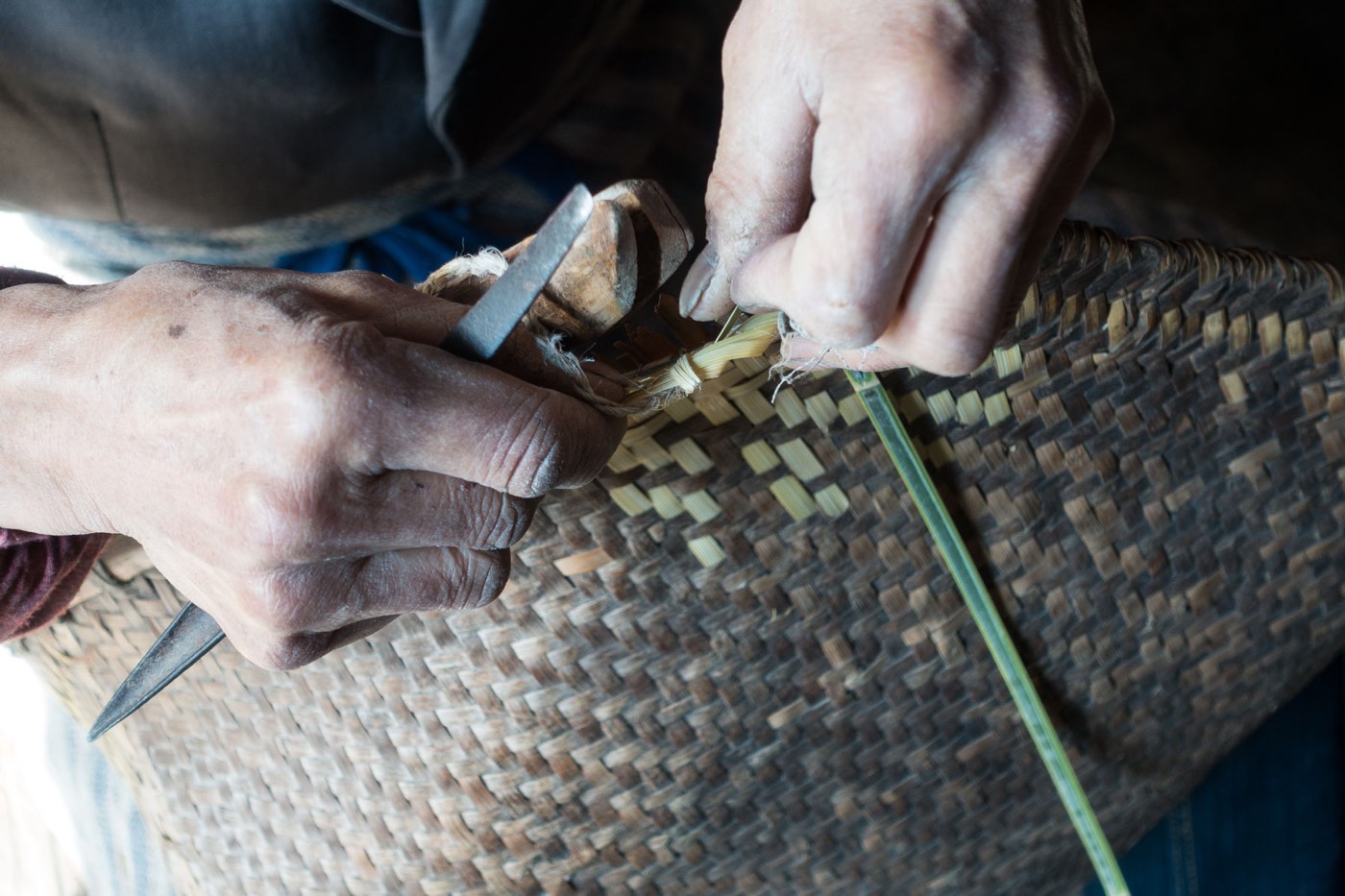
Crafter: like making things? The locals know how to make lots of things out of local materials. Copper making, iron, bamboo weaving, wood carving etc. More than enough to fill a weekend…. Check our activities page.
Cook: Learn to make homemade noodles or dumplings for a whole Huizhou food weekend including visiting markets, farming our land and foraging in nature plus of course cooking lessons.
Huizhou architecture is a very important part of the local culture. The highlights are the stories told traditionally through the wood, stone and tile carvings on the buildings and up to recently painted above doors and windows of the houses. Below is a brief introduction:
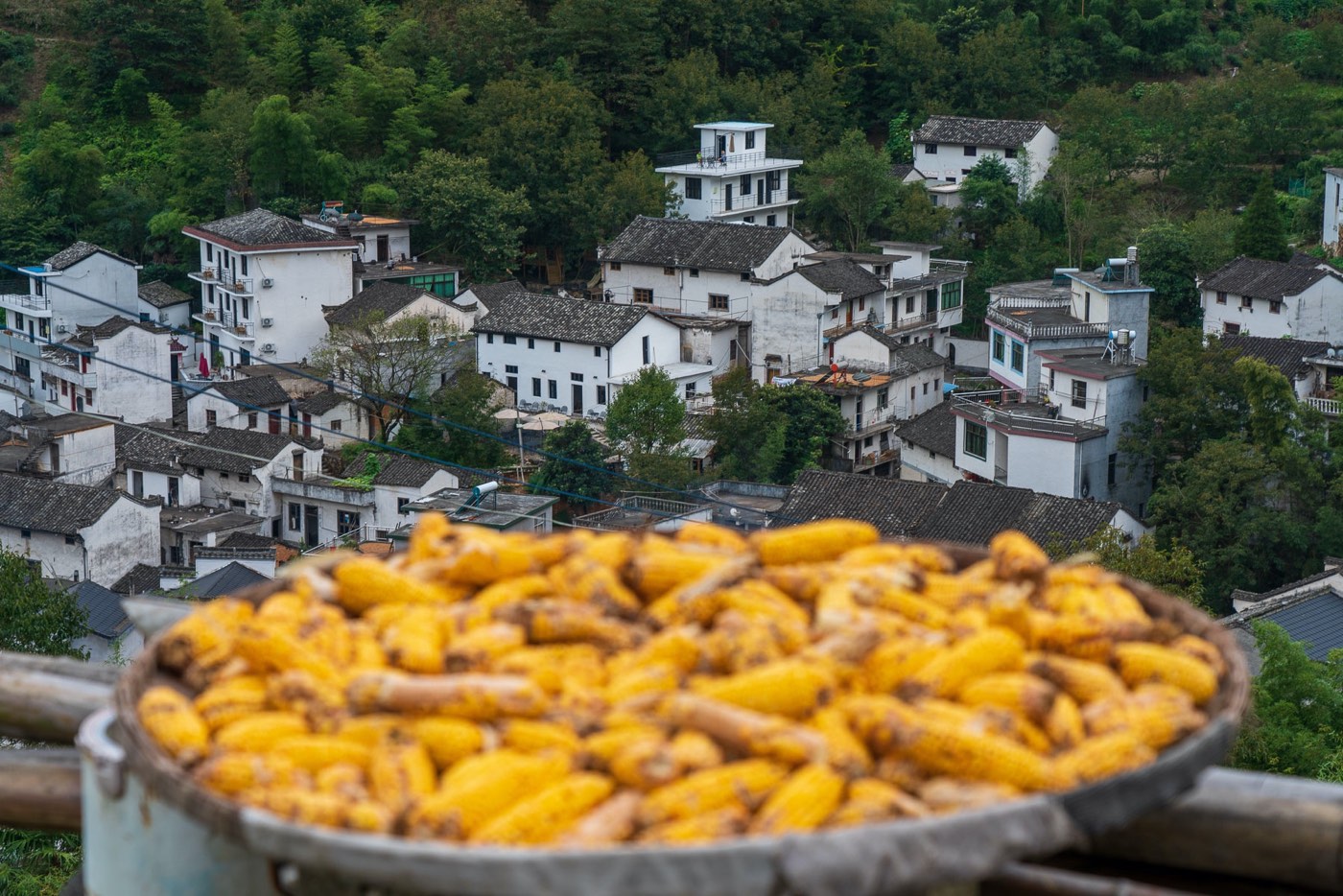
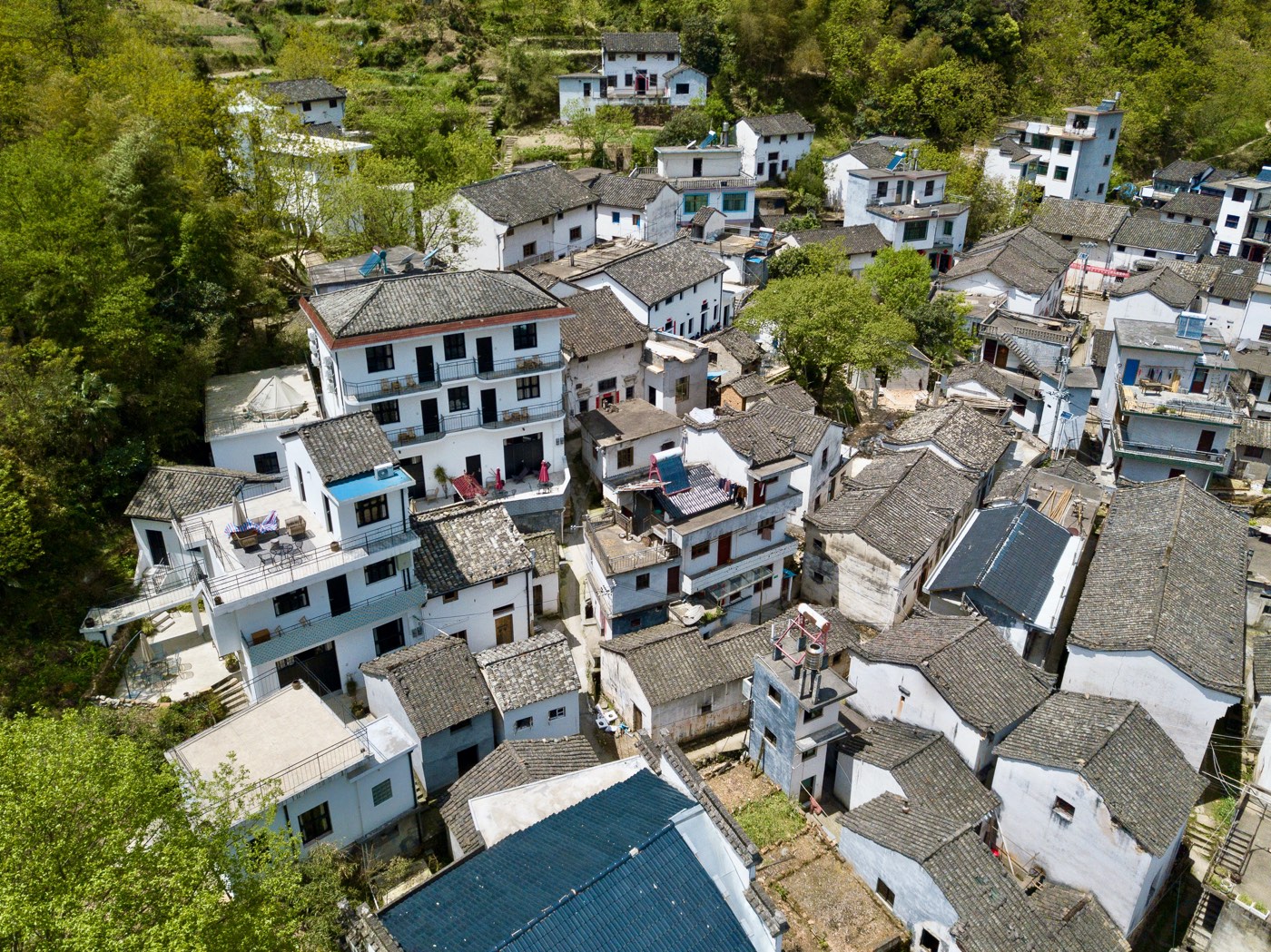
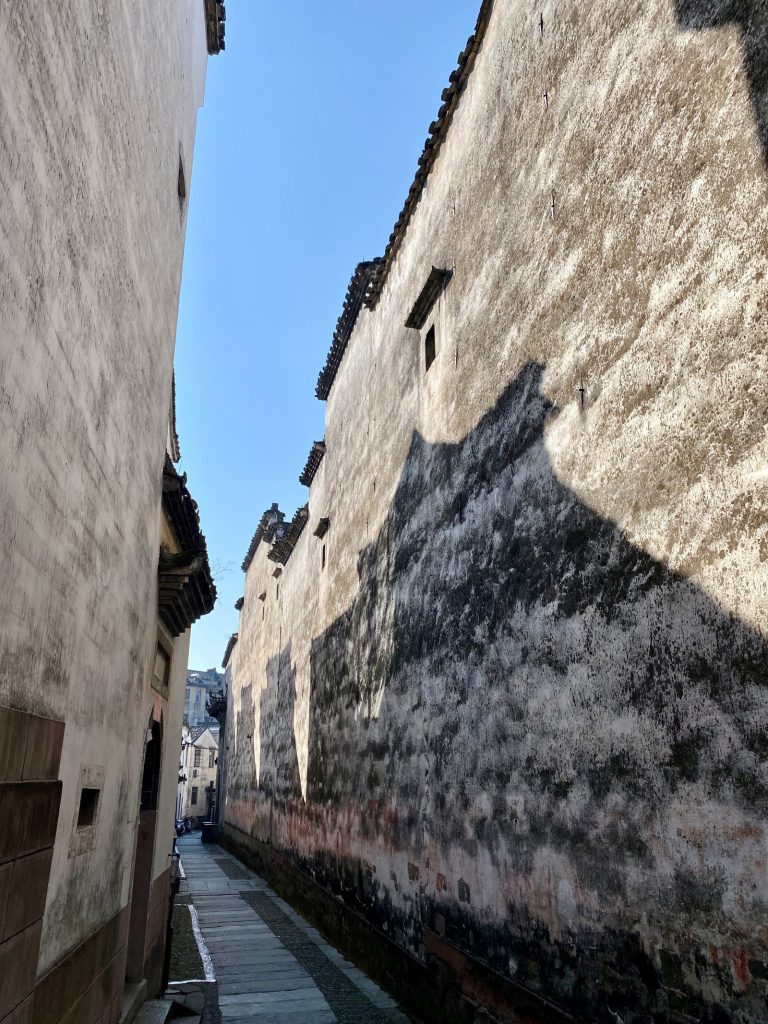
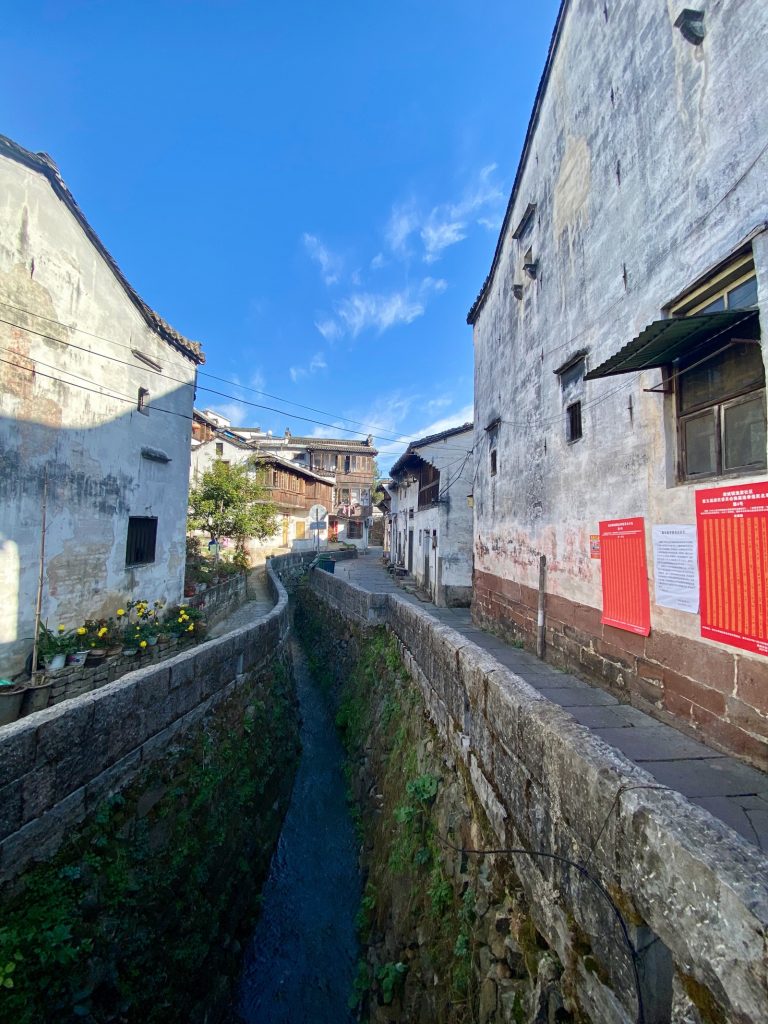
The main towns sprang up along the main river arteries and flatter lands surrounding them. Hill villages were built around a source of water and protection from the environment below hilltops or hidden in horseshoe-shaped depressions. The larger buildings were mostly courtyard layouts in form, with narrow streets or waterways connecting them. High white walls kept people out, small lane-side windows kept the ladies of the house concealed with the heart of the house being its internal open courtyard. Food would be cooked in the courtyard and public receptions would take place there too. Many of the larger houses had multiple levels going back and up. The elder and more senior members of the family would live further protected at the back.
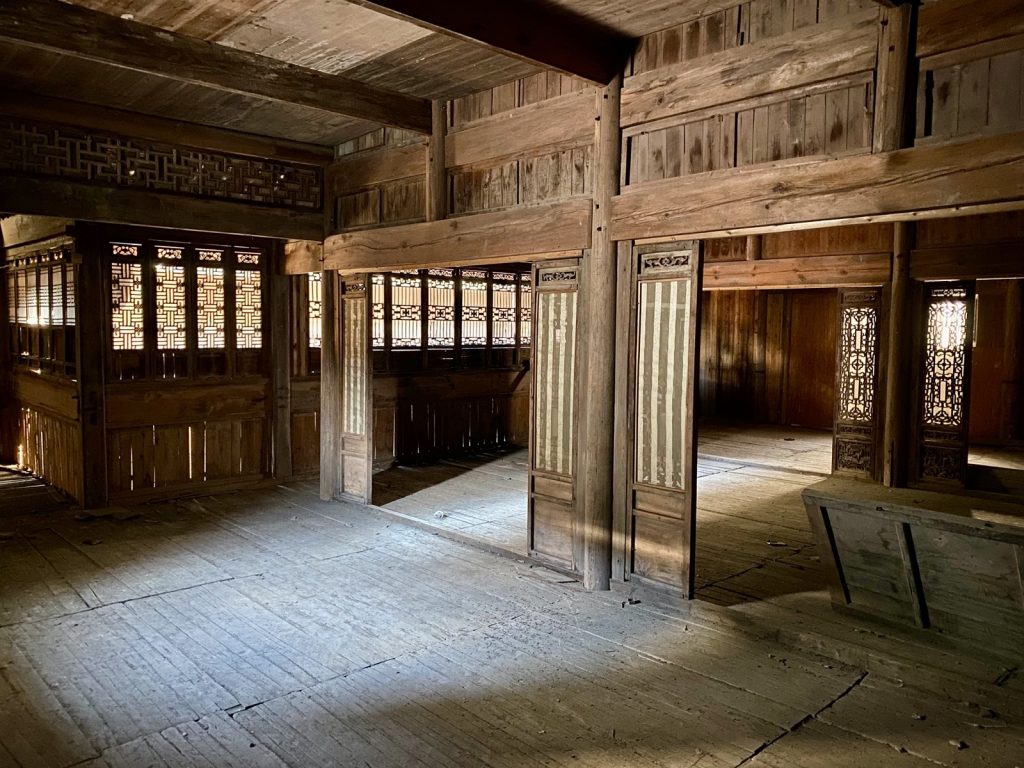
The majority of the houses were small and dark, wooden framed and mud-walled (mud brick or rammed earth) of two levels. You would enter through a double door into a living/eating room, many times a double-height level allowing more light and air to circulate. Mud or stone floors kept things cool in summer and the thermal mass of the building would be cooled at night making hot summer mornings on the ground floors quite comfortable. The houses had no heating making cold damp winters unforgiving. Instead, people walked, and still walk around with little portable charcoal heaters which they put under their chairs or warm their hands with. Stairs were located at the back of the houses with two small rooms on either side. On the second floor would be bedrooms with very thin wooden panels dividing each room and wooden floorboards. This would make for a very communal family existence!. Above this would be another floor or a tiled pitch roof floor. This was not always lived in as the heat in summer was too much and the vented tiles too cold for winter. Items were stored and dried here as well. Below the house many times there was a room for the family pig and also one for your coffin. It was and still is a local tradition that you prepare your own coffin at age 40 and keep it in the basement of your home. Cooking for smell and fire reasons would normally take place in smaller outhouses. Plumbing was non-existent and water would be collected from the local river, well or from the rain.
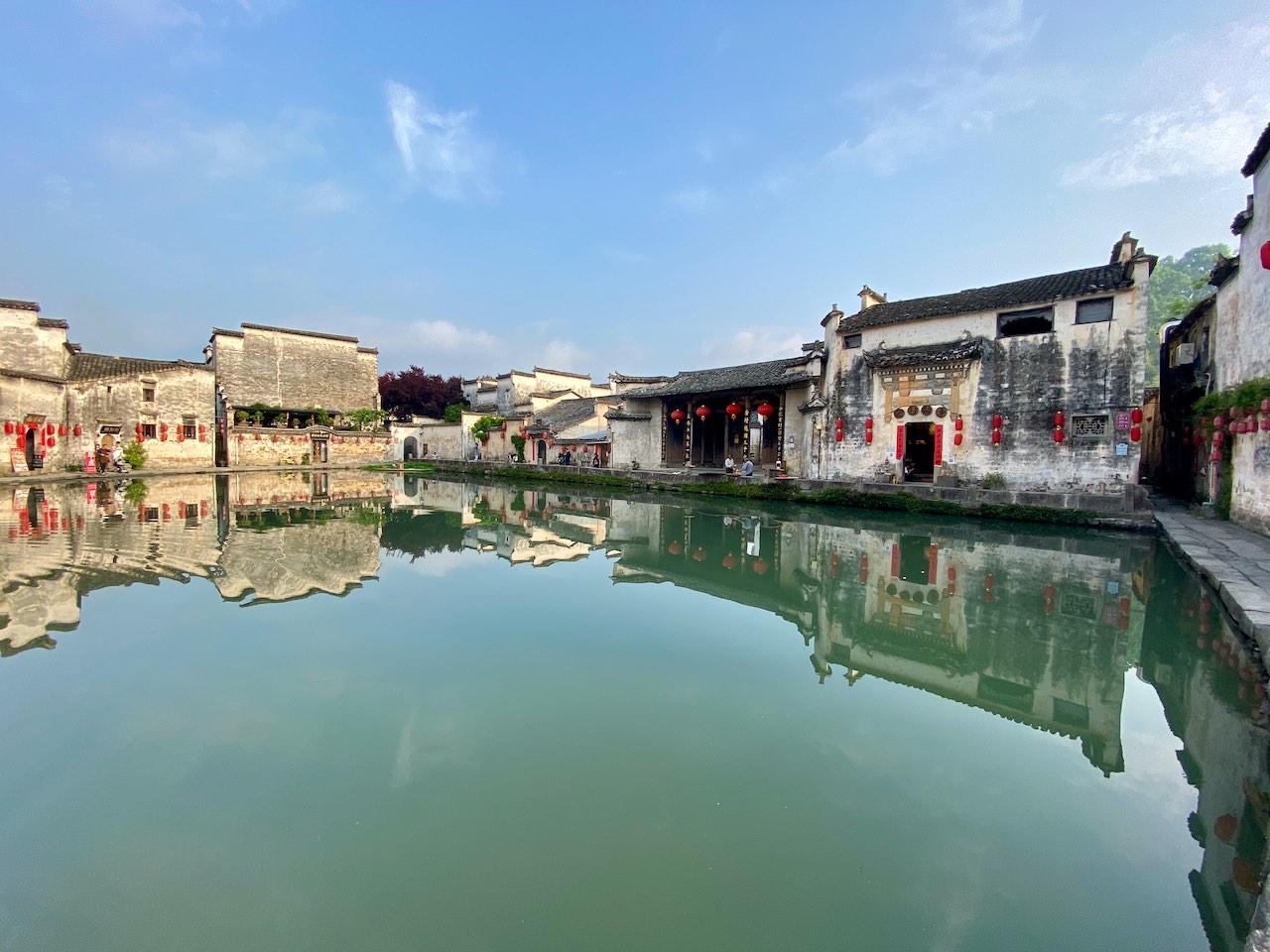
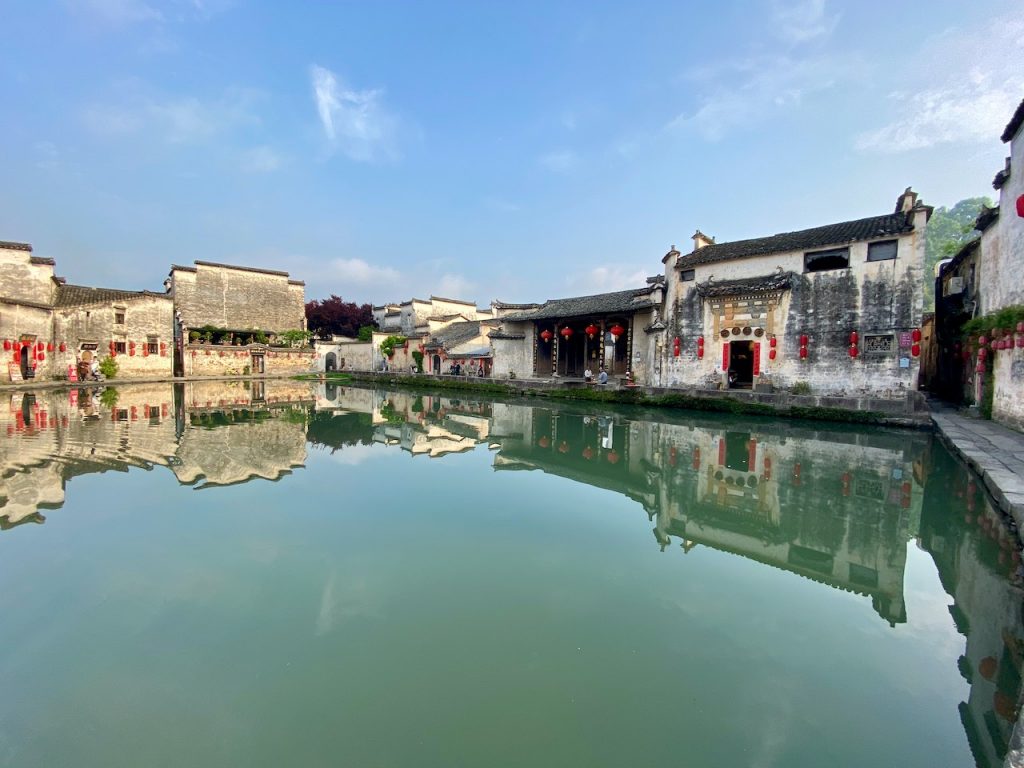
Huizhou style buildings built around a central pond in a valley below the hills. Xidi Village
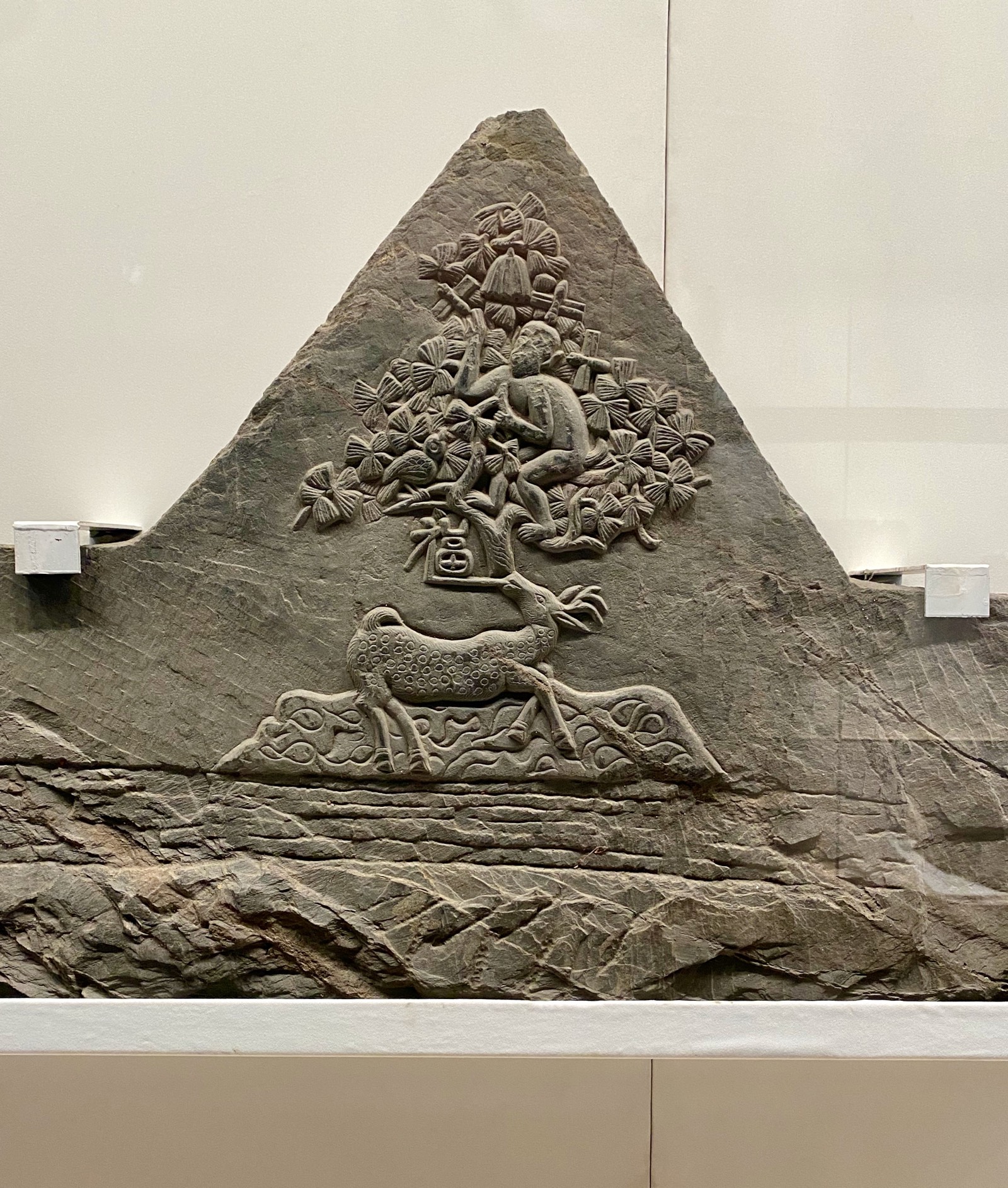
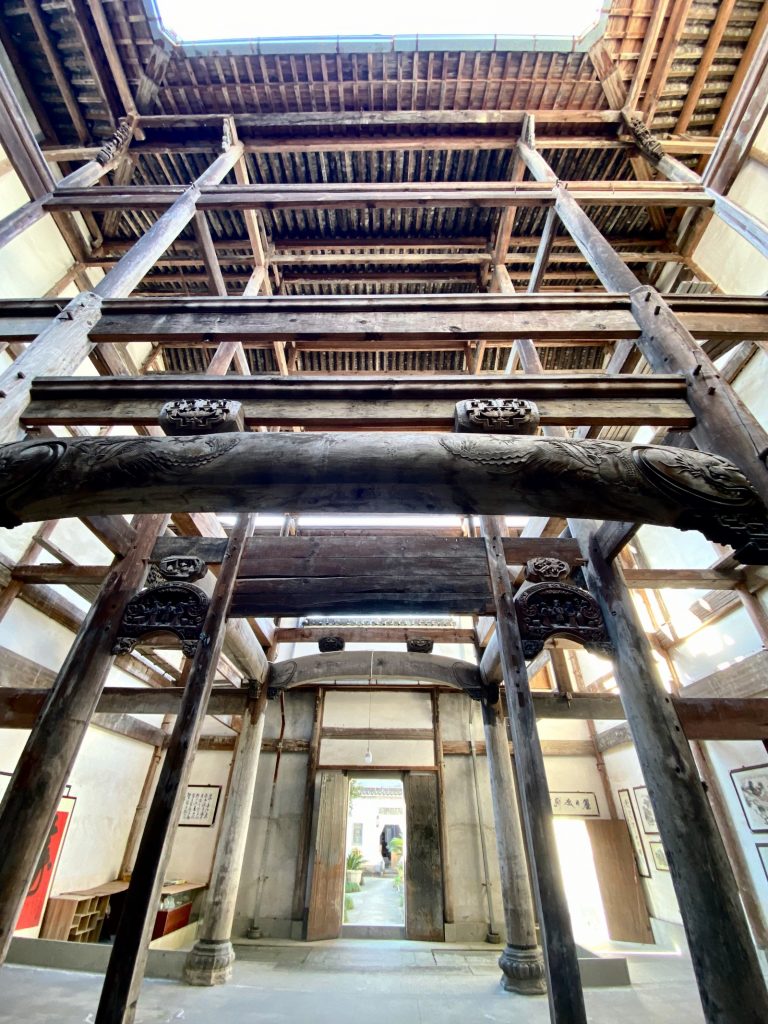
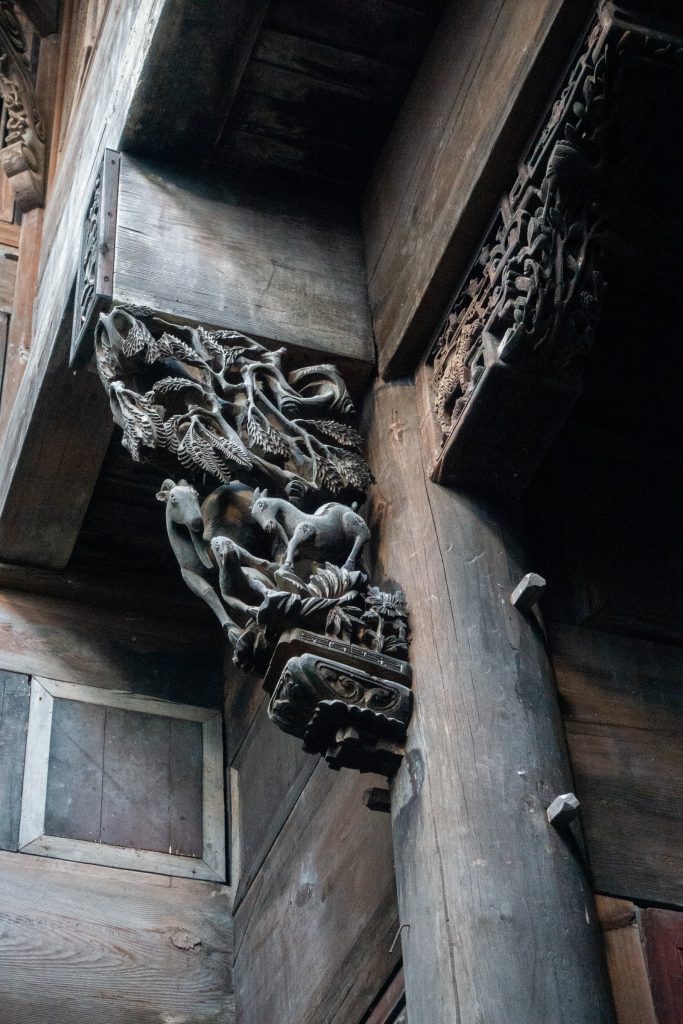
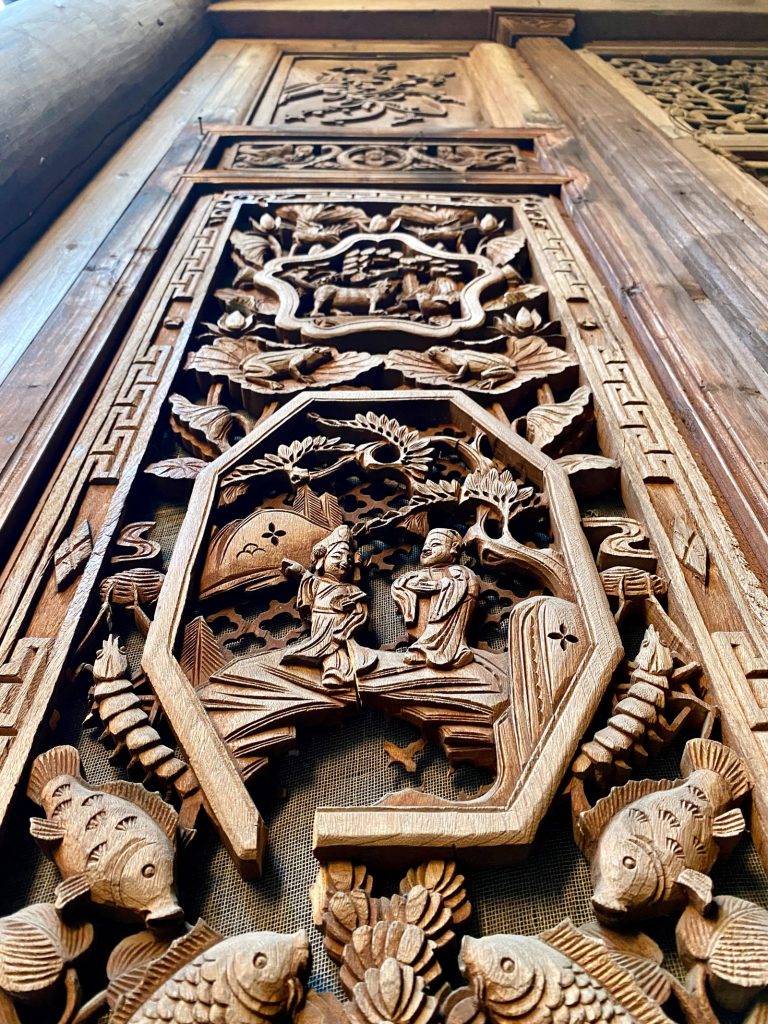
The value of the home dwellings was in their wooden frame structures. The bigger the wooden columns and beams and the more elaborate the carvings the stronger the family. Important family and local traditional stories were carved on doorways and the ends of beams. Some to preserve family identity, some to ward off demons, some for Fengshui. For the poorer families, they would resort to painting stories on the facades which again still goes on till today.
The architecture is very organic in material selection and thus every year buildings burn down or the mud disintegrates and the building returned to the earth. The building location was based on access and logistics but for the richer families also Fengshui. Main times these buildings were clustered around a pond or small lake. Stone paving was laid in the more important streets while many of the smaller villages were just connected by small mountain paths. Wealthy families would erect stone side steps outside their doors to easily mount and dismount their horses and ponies.
Modern architecture wise there is not a lot to get excited about but that’s changing as well. Most of the new architecture is about very low-cost land grab and there is very little design or aesthetics about it, quite understandable given the short and economical nature of its development. Things are changing and local design traditions built on local Huizhou character and modern life and standards are starting to spring up. Hopefully, some esthetic design standards and more conservation can be put into place while allowing change to take place. Not so easy to actually pull off anywhere!. We assume half of the old buildings and many old villages will be lost over the next 10 to 20 years. Some have become dangerous as the mud walls need to be well maintained but mostly it’s due to families wanting to live closer to drivable roads and closer to larger towns while having larger, taller and plumbed, brighter and better-served interiors.
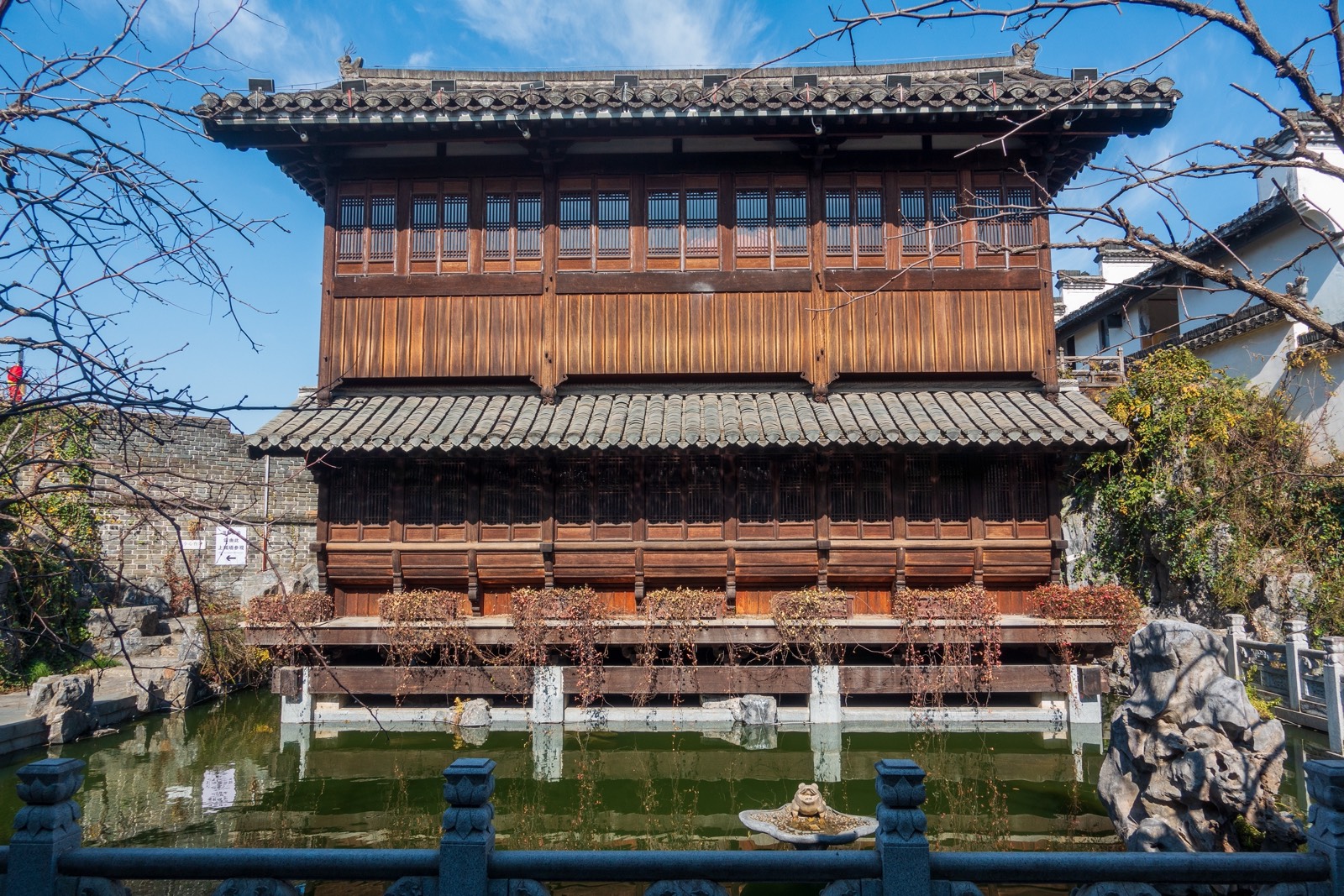
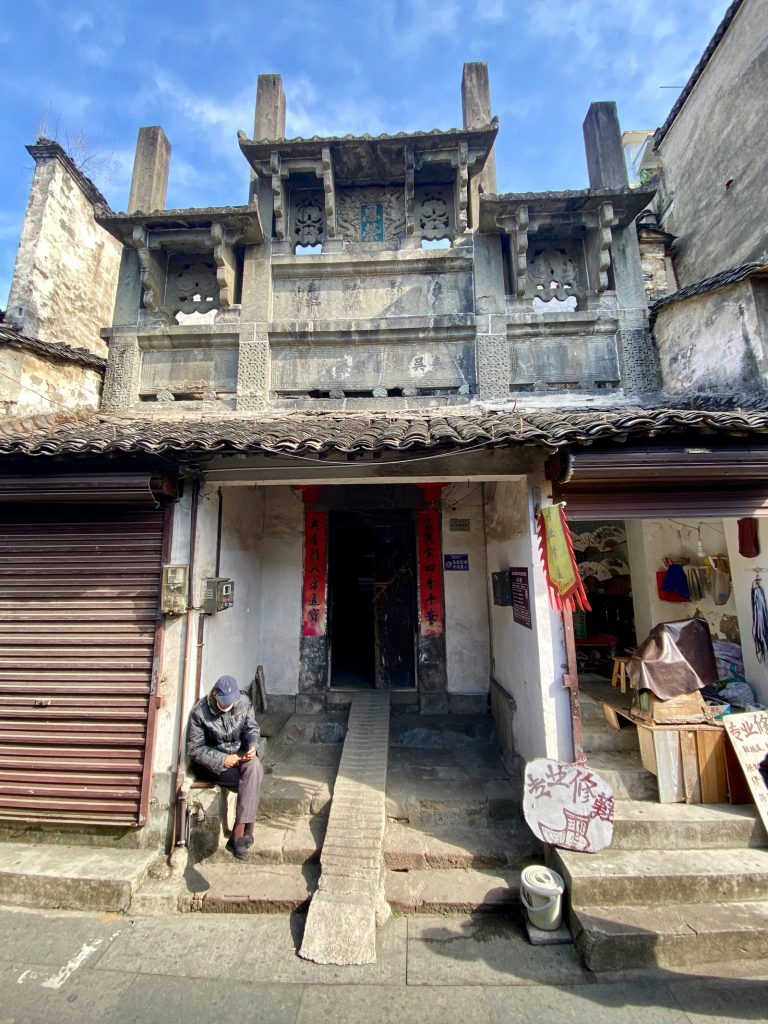
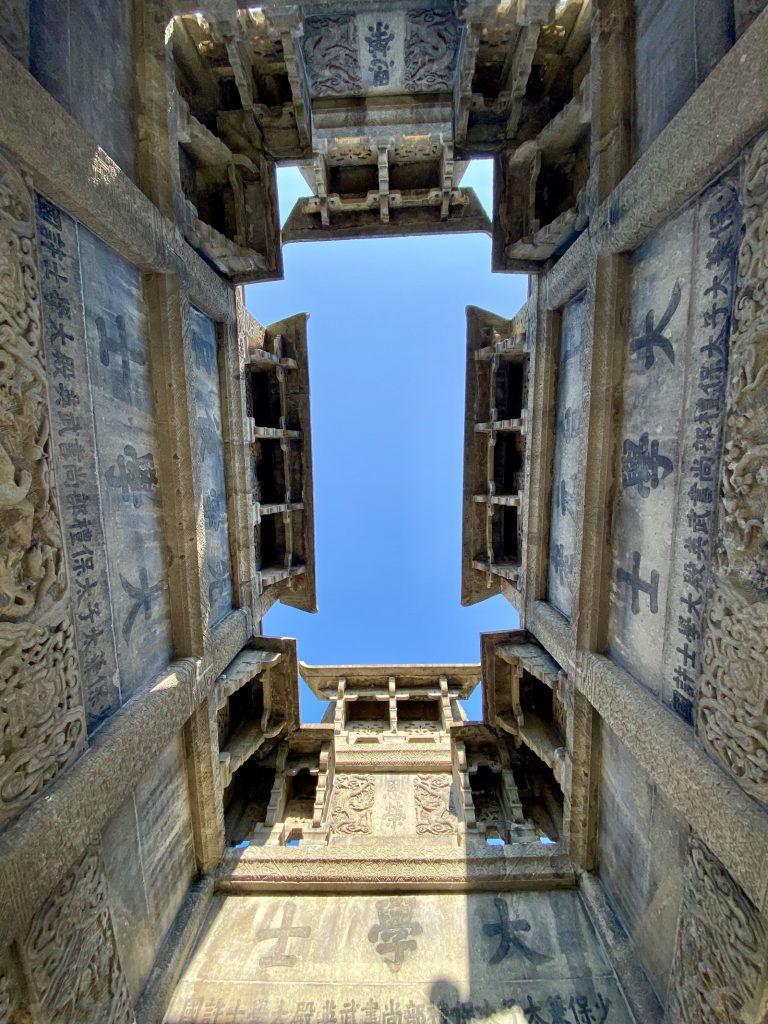
Other than the above mentioned residential architecture great examples of Huizhou architecture can be found in its ancestral halls, memorial archways and bridges. The ancestral halls mimicked the residential buildings (and also acted as them) but were built on a larger scale. They were functionally used for ancestral worship and advocated filial piety and also used to discuss important clan issues and hold ceremonies such as weddings and funerals. The memorial archways were built by the wealthy merchants to the entrance to their homes and villages and nearly always required imperial permission. Made of stone and sometimes laid out in groups they would frame one experience and entrance, tell relevant stories and assert wealth and authority. Bridges were strategically built and many esthetically decorated and were also central points to village and town life. Many were covered with seating areas and also carving depicting local stories. Some survive till today.
Some of the old archways get built around over time with just the tops visible.
The built landscape was mostly practical and agricultural in function. Small bonsai and rock gardens sat adjacent to the plots of land but large formal gardens were never a thing due to the beauty of the surrounding landscape and the scarcity of arable land. Potted plants and mini bonsai rock gardens mimicking the surrounding hills were placed in the courtyards. Water was always very important as a resource and also very symbolic.
The key points of Huizhou Architecture are:
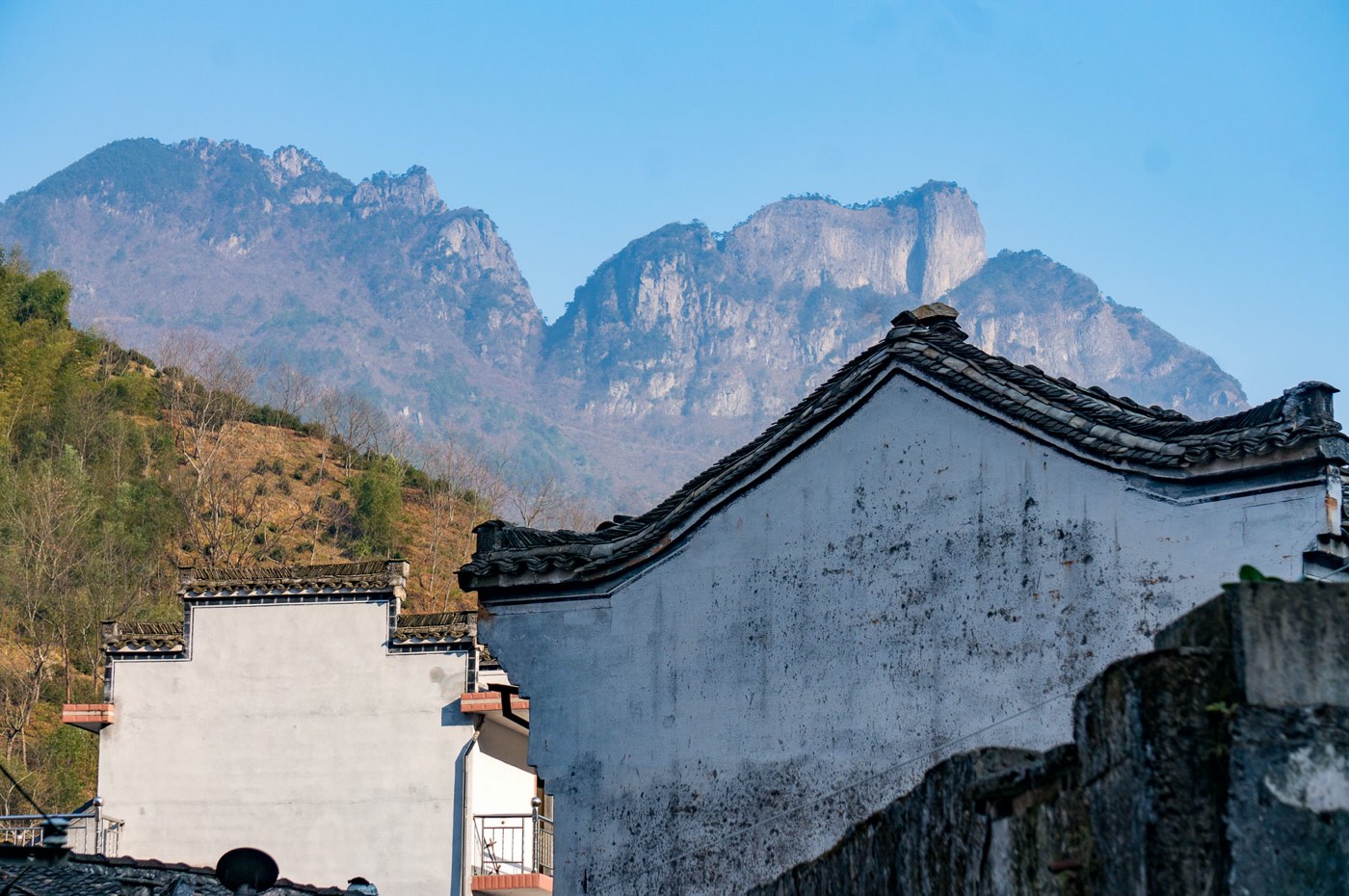
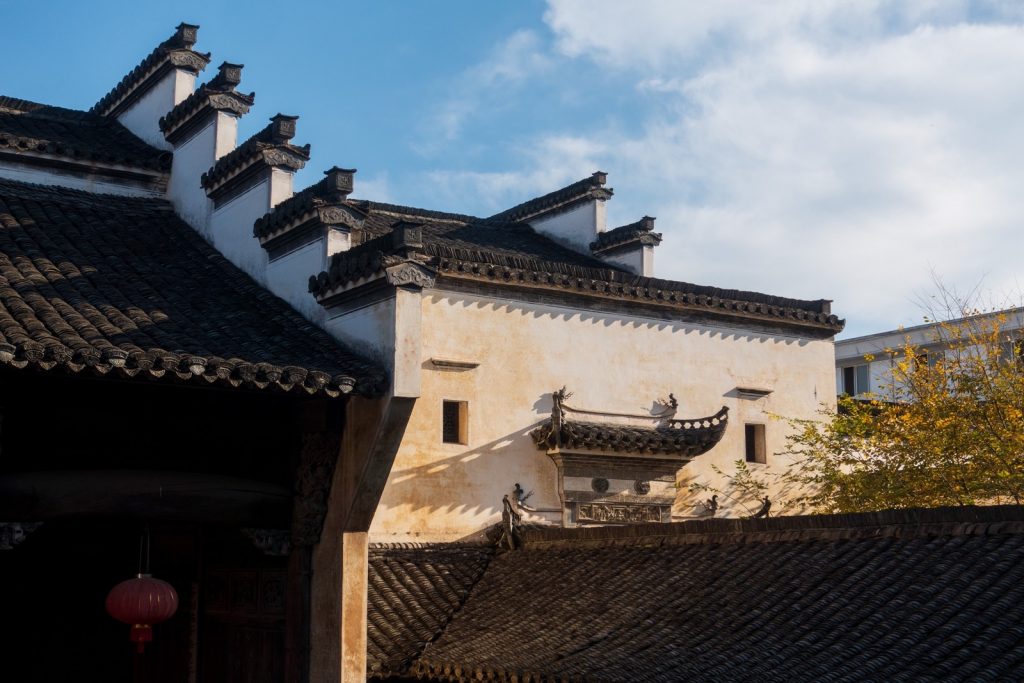
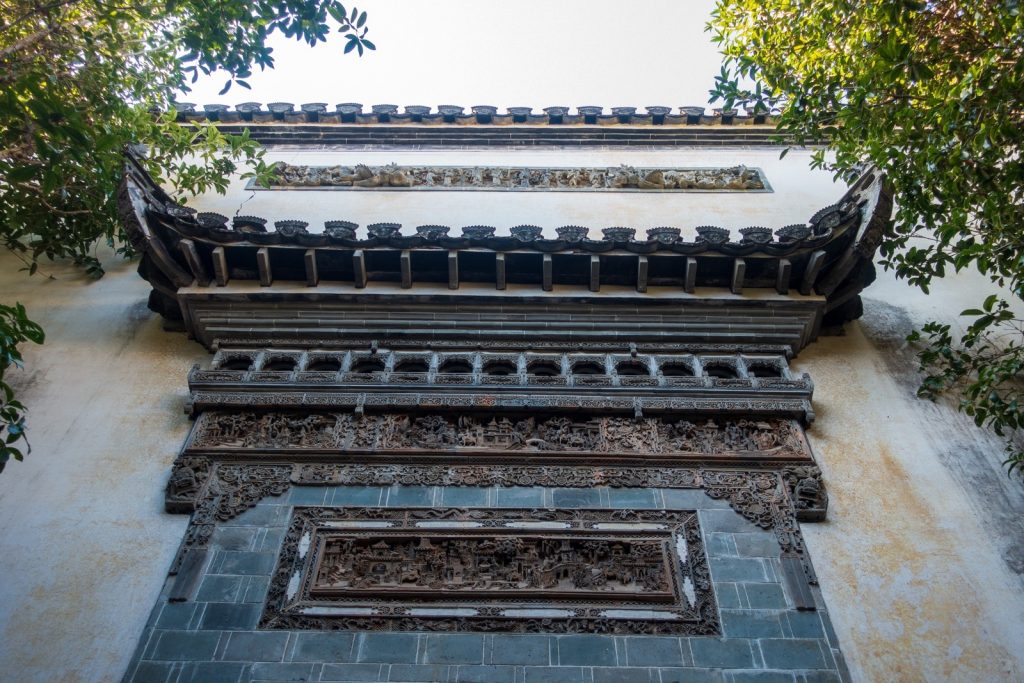
High “white washed” walls with black roof tiles. These would keep out (or in) unwanted people while contrasting sharply with the background while being cool in summer.
They where inwards facing and built around open courtyards to provide airatted safe spaces.
Many had various rows / levels and decorative covered arches and “horse-head” walls.
The entrance gate would display the social statues of the family / owner. The more stone present and the more alaborate the carving the more powerful the family.
Many of the larger family houses were seperated by rows each with a sub family inhabbiting one row.
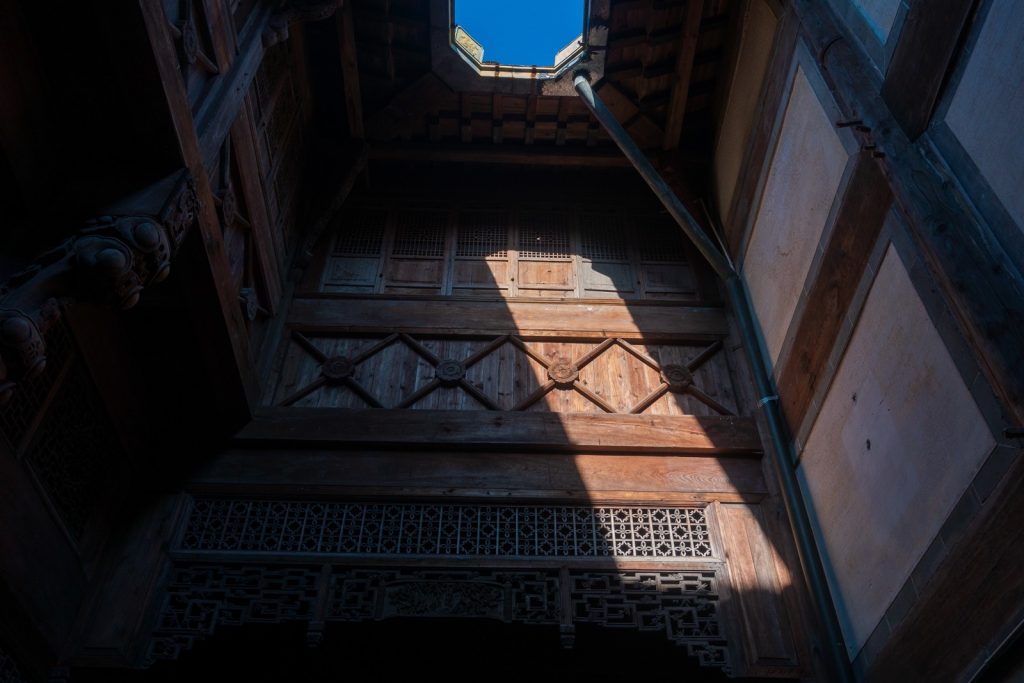
Many had patios which provided light, ventilation and good luck! Water is a symbol of luck, rain water would be allowed to flow into the courtyard / patio and collected and used but not allowed to flow out, just like you would not like your luck to flow away!
The inner courtyards helped illuminated and airrate the lower levels and where known as “light wells” (天井; tiānjǐng)
Residential buildings key esthetics and elements:
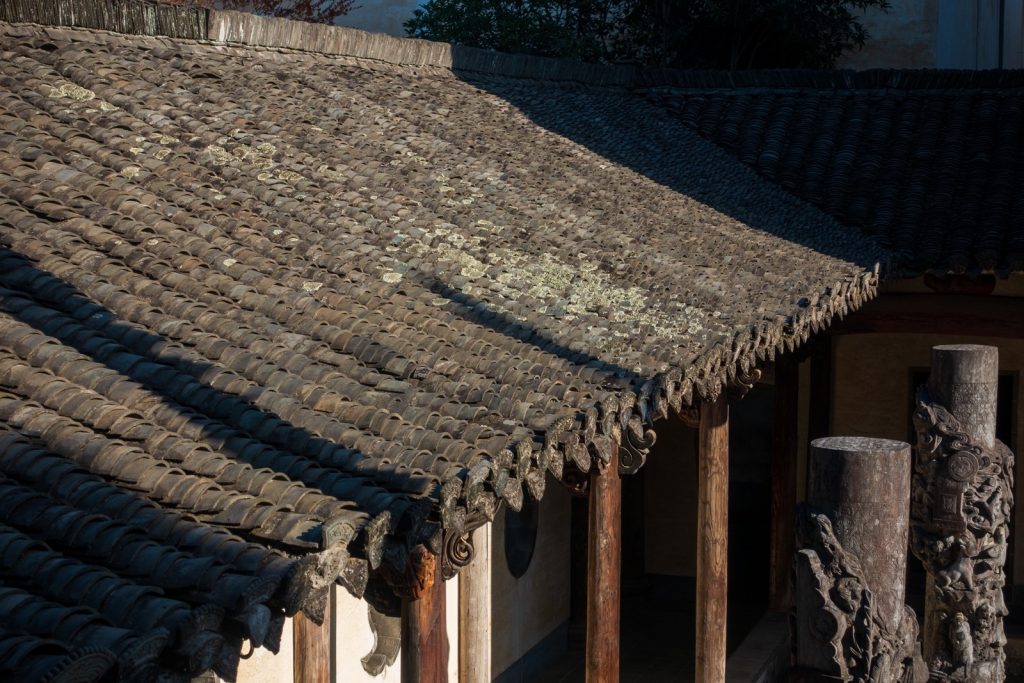
High walls & windows kept people out and indoors private. White walls & black grey roofs.Wood Columns and Beams were the main investment & asset of the property and the main supporting structure. Sloping Roofs with ceramic tiles. Warmth in winter, air in summer. Rainwater would flow down them and was collected for use and also has a Fengshui element. Horse-Head Walls: multi-level walls at the top of the high external walls. Used for security purposes, to help prevent fire travelling along the wooden structures and also as a key aesthetic element to break up large facades and blocks.Building Decoration. A key highlight of Huizhou architecture is its carvings depicting stories and meaning. Carved screens would provide sun shade while allowing airflow. Entrance archways where always the main “face” of the house and the family status symbol. Some stunning stone, brick and tile carvings. It would also help keep rain off the entrance stone.A patio courtyard was central to most larger houses. Sometimes in the center, sometimes closer to the front of the house. It would allow air and light to flow in and used for cooking. Rain water, a symbol of wealth, would be collected and stored! Winged rooms with verandas made for nice seating spaces. They also doubled as hiding spaces for the ladies and children of the house from bandits.
Many of the above pictures are taken from She County traditional “architectural” meusum. Well worth a visit if your in the area. Try and identify as much of the symbolism and stories of the architecture.
The meanings of the carvings & paintings:
Chinese architecture has more storytelling in it than probably any other style of architecture along with a lot of playful charm. We hope to add a whole host of info on the meaning of different symbolize so you (and we) can decode the decorative elements of the architecture. Anyway to start:
Some of the Symbolic meanings:
Bat Collecting Coins meant good fortune is in front of you.
Looking up to a magpie suggested a blessing
Clock, vase and mirror symbolised peace, and harmony in the house. You see these as common objects in contempory houses still today.
Also, there was meaning based on more temporary placement of items:
If the master was out then the semicircular half tables would be placed against the walls. If he was there then they would be combined, this was also a warning to male visitors not to enter!
Huizhou is an area west of Hangzhou which has cultural and economic historical importance for China. The rough, hilly and waterway laden terrain with close access to the old cities of Hangzhou and Suzhou brought about China’s first real migrant and then merchant class over 1000 years ago. From this sprang an important form of Chinese architecture, the development of refined ink painting and calligraphy, unique local food and customs. Huizhou had further influence on the greater area, from nearby Jingdezhen porcelain to the wealth development in Hangzhou and Chinas Eastern cities. Today the area is still known for its stunning hills, mountains, rivers and forests. Its also well worth a visit to get a sense of rural eastern China, old village life, customs and the development of migrant wealth and culture.
Lots of Huizhou Villages still exist to this day.
Introduction to Huizhou
What is Huizhou
Huizhou today no longer exist as a political / geographical region but it still exists in the hearts and identity of the locals, their culture and identity. Huizhou was a prefecture (like little province) level area which extended from west of ChuanAn (Linan / Hangzhou) in Zhejiang to Jingdezhen in Jiangxi with its centre seat being She County.
Huizhou was made up of the sub-counties of Shexian County (歙县), Yixian County (黟县), Xiuning (休宁), Qimen (祁门), Jixi (绩溪), and Wuyuan (婺源) and covered about 14,000 km2.
When was it started
Huizhou was formally established as a “prefecture” in the Song dynasty. It lasted as an official geographic “province” until modern China when it was divided between Anhui, Zhejiang and Jiangxi.
Huizhou Highlights
Things you should understand and see while here!
Migrants, Merchants & the first Chinese mega rich!
Local historic traditions
Village Life
Architecture
Crafts
Agriculture
Water & Rivers
Forests & Nature
Festivals & Activities
The essence of Huizhou – The Flow of Life!
The Flow of Mountains & Rivers driving change! The flow of rain pouring in and river water rushing out. The flow of earth moving slowly down the terrain. The flow of migrants out and merchants returning. The flow culture and traditions. The area and life of Huizhou is all about movement and flows.
What are the Historic Highlights
China’s Migrants & Merchants became the strongest in China!
Refined small scale Chinese village architecture and landscaping!
Intricate carvings in wood, stone and tile telling stories and representing identity & power!
Refinement of China’s Four Jewels, ink stone, ink, brush and paper and their use (painting).
Hui Opera, what Beijing Opera originates from.
What are the Current Highlights
Visit She County and its museums to understand its history and architecture.
Visit Yixian / Xidi & Wuyuan to understand its old towns.
Visit the little villages hidden in the hills and along the XinAn River to understand its old rural river life.
Visit nearby Jingdezhen to see the first major production line and the porcelain culture of China.
Visit nearby Hangzhou to see one of the ancient worlds most amazing cities which was described by Marco Polo as “”The City of Heaven, the most beautiful and magnificent in the world.”
Visit nearby Huangshan Mountain which has a huge influence on Chinese fine arts, landscape architecture and many cultural endeavours.
Oh, and visit Wildhomestay to get your rural and wild introduction to the mountainous Huizhou area.
What to Buy
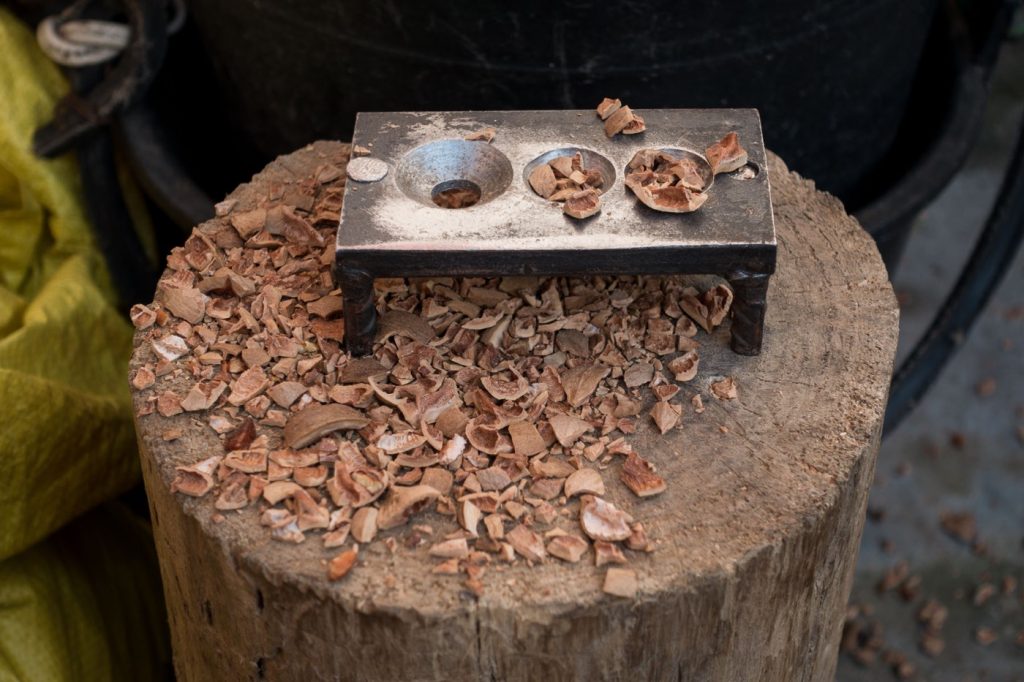
The area around the homestay and our part of Huizhou is famous for its hickory nut and also wide herbs.
Buy some of the local Hickory nuts, green tea, wood and stone carving, hams and oils.
What to Eat
Hui cuisine is one of the 8 main Chinese cuisines and is well known for its use of wild herbs. Taste Tofu! Dried, fermented, soft, hard, smelly, hairy,…….. and all the local dishes cooked with it. The Tofu is great because the spring water is great. We get it fresh and filter it. The pork is fantastic. The salty ham and sun-dried sausage. Local free-range Chickens make a good soup. Pot cooking and fire cooking is the local speciality. Pots at the home and fires cooking the food on the old trails. A lot of the base products are salted to facilitate transportation and storage through the mountainous area. The Hickory nuts are famous in China. Local rice wine! And lots of great tea…
History
The area was sparsely populated before the Han Dynasty (202 B.C. – A.D. 220). Small nomadic clans, mostly of the Yue people settled and formed small villages dotted at strategic points along waterways, at the base of mountain passes and resource-rich areas. The Yue had moved from south China and advocated bravery, martial arts, and lead a very nomadic mountain existence in the area. Over time these small clan-based villages soon grew too large for the local population. The mountainous and river laden land was mostly unproductive and unstable and along with the local bandit clans forced many of the younger generations out. These tough, hardened, entrepreneurial young people set up in neighbouring areas and soon made their way to the larger cities, many as merchants.
The Yue people settled into larger groups, people returned integrating Confucian culture and traditions. The Yue were very enterprising and also tough, courageous and explorative. This they combined with Confucian education, social morality and clansmanship to build a very strong merchant culture. Therefore the Huizhou culture can be seen as a combination of Yue clansmanship with confusion characteristics.
Historically merchants and migrants were the bottom rung of Confucius society. After setting up their business in the main cities of the time, they would stick around, make their money, send it back to Huizhou but never really establish routes or were accepted locally in the cities. The wealth they generated would flow back along with confusion education and sophistication, back to their ancestral homelands. By the Ming dynasty, the flow of entrepreneurship, going mostly East and cash and culture returning was established. With their newly found wealth, the merchants would build new townhouses, some of the serious size and grander. Overtime (and with emperors approval) they built memorial buildings and archways to worship their ancestors and gods. From the stability of property ownership and the flow of cash flourished architecture, poetry, the development of writing, painting, opera and many local traditions.
Memorial Archways are dotted around the area.
This flow of people out, wealth and eventually people returning established the Hui merchants as the most powerful in China by the Ming dynasty through to the 19th century. There are many stories of this “flow” including that people named “wang” in China originated from Hangzhou. Also, there is a fascinating story of , Hu Xueyan (1823-1885), a famous official businessman, politician and representative of Huizhou merchants in modern China. In 1823, Hu Xueyan was born in Huli village, Jixi County, Huizhou, Anhui Province. When he was young, his family was very poor and made a living by helping people herd cattle. In 1835, when Hu Xueyan was 12 years old, his father died of illness. When he was 13, he began to wander alone. He worked as a boy in Hangzhou grain store and Jinhua Ham store, and became an apprentice in Hangzhou “Xinhe bank”. From sweeping the floor and pouring out urinals, he became an official clerk of the bank because of his diligence and sureness after three years of graduation. By 1842, 19-year-old Hu Xueyan was accepted as an apprentice by the owner of Hangzhou Fukang bank. The owner had no children and regarded Hu Xueyan as his own son. When the owner was dying, he entrusted the bank to Hu Xueyan. This bank worth 5000 liang of silver can be called Hu Xueyan’s first pot of gold in his business life. In 1862, Hu Xueyan won the trust of Zuo Zongtang, the new governor of Fujian and Zhejiang, and was appointed as the manager to preside over the money, grain and military pay in Zhejiang Province, which made Fukang bank a great profit and since then he became both an official and businessmen. Till 1872, there were more than 20 branches of Fukang bank, more than 20 million liang of funds and 10000 mu of land. Because Hu Xueyan helped Zuo Zongtang to make meritorious contributions, so he was granted a government official title. He was regarded as one of the riches persons in China.
People like this lead to the famous local saying attested: ‘前世不修,生在徽州,十三四岁,往外一丢’ meaning ‘due to a lack of self-cultivation in the past life, you were born in Huizhou; as soon as you turn 13 or 14, you’d be kicked out to make a living.’ The tradition still goes on today. Huizhou and the Homestay area is full of migrant merchants and hopefully, over time will reestablish its past traditions and sophistication which is already slowly happening.
Hui Ink
Hui Ink is one of the famous “four treasures of study”. (Ink / Ink Stone / Brush / Paper). It is named after the ancient Huizhou Prefecture. In the late Tang Dynasty, with the war in Central China, a large number of intellectuals and skilled craftsmen moved south. Xi Chao and Xi Ting, a father and son who worked in ink crafting, fled to Huizhou. They found that there were high-quality ancient pines found adjacent to Huangshan Mountain, so they made a living by making ink. Because of its excellent ink quality, the manufacture base of Hui ink began and flourished. In the Song and Yuan Dynasties, ink workers added drugs to become medicine ink on the basis of their predecessors. People not only used ink but also began to collect ink. Ink began to develop in the direction of handicrafts. After the middle of the Ming Dynasty, the ink making scene of “Hui people’s family tradition” appeared in the whole Huizhou area, making Huizhou the centre of the national ink making industry.
The production process of Hui ink is quite exquisite. Burn the pine, rinse the ash, mix with the gel, pestle, shaping, air dry, polish, wash, paint gold. There’s an ink factory in Shexian where you can see how the ink is made. In addition to this the area was also well known for quality brushes (lots of wildlife), inkstone (She rock which is variety of black slate), and paper (lots of trees!).
Opera
Hui opera is one of the local operas in Anhui Province, China. It is not only an important local opera of Han nationality but also an important opera of Chinese opera. Not only Beijing Opera evolved on its basis, but also many local opera, operas in southern China also have a historical relationship with it, and its influence is almost all over the country. Huizhou opera has a rich repertoire, with a total of more than 1400 traditional dramas. Huizhou opera is also very rich in content and covers a wide range, including disputes among countries, court events, gods and ghosts, folk stories and interesting life events. On May 20, 2006, Huizhou opera was included in the first batch of the National Intangible Cultural Heritage List with the approval of the State Council. It’s worth asking around if any of the travelling Huizhou opera troupes are in the area!
Huizhou Architecture
There is lots of great small scale rural and urban traditional village architecture to see in the area. See this intro for more information.
We are in the process of trying to write and photograph interesting places, activities and historical sites around the area. Let us know if you have any content to contribute!
We are in the process of trying to write and photograph interesting places, activities and historical sites around the area. Let us know if you have any content to contribute!…